
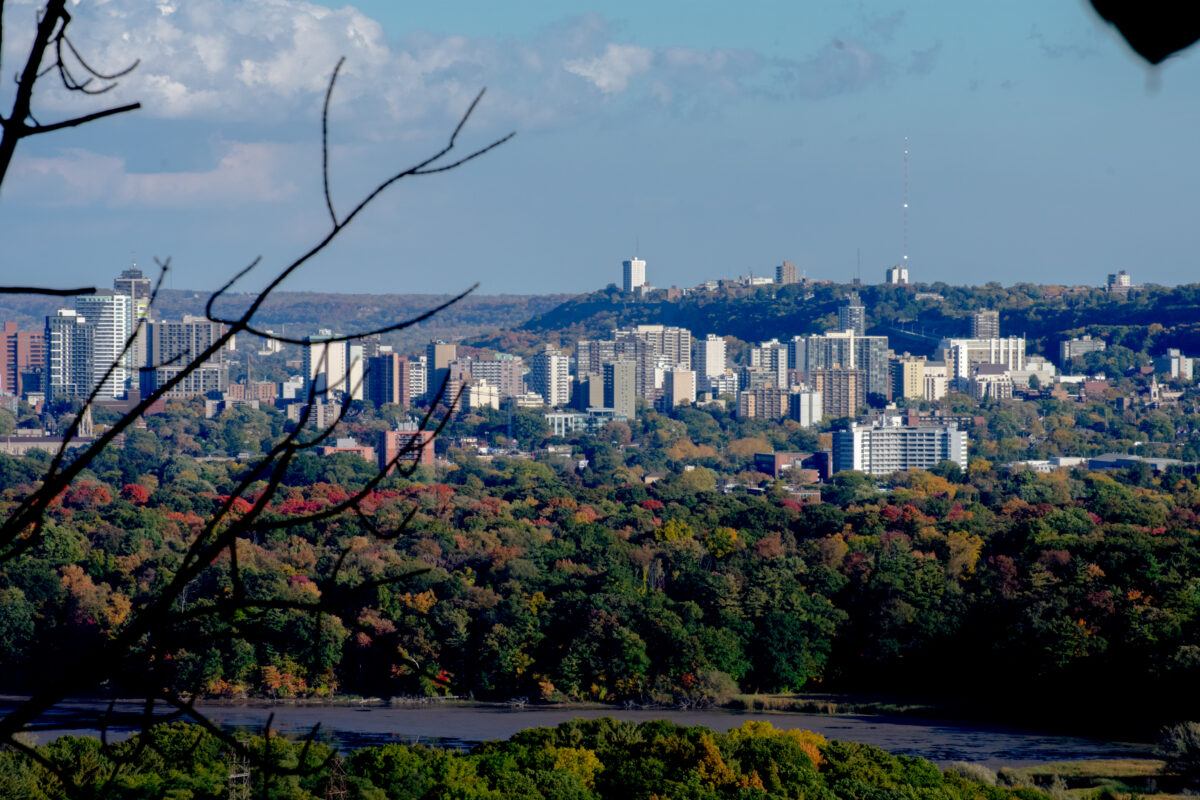
The Ontario Land Tribunal has ordered that the City of Hamilton must expand its urban boundary by at least 1,600 gross developable hectares to accommodate residential growth to 2051, overturning Hamilton’s urban boundary freeze.
In a decision issued today (August 17, 2026), following a 15-day hearing held between April 13, 2026 and May 1, 2026, OLT Member Eric Crowe ruled that Hamilton’s 80 per cent intensification target is inconsistent with the Provincial Planning Statement, and must be quashed.
The ruling effectively determines that the approximately 1,600 hectares of lands across Hamilton that are between the current urban boundary and the provincially-protected Greenbelt are now permitted for housing development.

The challenges against Hamilton’s urban boundary freeze were launched by three separate landowner and developer groups seeking to build on greenfield lands in Upper Stoney Creek, and between Hamilton’s existing urban boundary and the Provincial Greenbelt near Hamilton’s airport.
The provincial Progressive Conservative government, led by Premier Doug Ford, amended Ontario’s planning laws to permit developers to apply to the Ontario Land Tribunal for urban boundary expansions, officially referred to as settlement boundary expansions.
“City Council members are elected officials by a democratic process, however their decisions have to be made in accordance with provincial policy and plans which in this case is now the PPS 2024 and the Planning Act,” OLT Member Crowe wrote in his ruling, noting that the OLT’s role is to review decisions for conformity with provincial policies.
Among the key criteria for determining if an expansion is required is what form of housing people are seeking to live in.
Under Council’s urban boundary freeze policy, to achieve Hamilton’s provincially mandated population target of 853,130 people by 2051, a majority of the 215,000 people moving to Hamilton would need to live in apartment-style housing units.
However, Ontarians want to live in ground-oriented housing, meaning homes with direct exits to the outdoors, such as stacked townhouses, compacted townhouses, semi-detached, and detached homes.
“The Tribunal finds … people’s housing needs and preferences cannot and will not be changed by pure force of policy alone,” OLT Member Crowe wrote. “The Tribunal finds a planning framework for the City that unduly relies on one housing type (i.e. apartment forms) to meet growth targets, does not ‘provide for’ a range or mix of housing options as required.”
The City of Hamilton’s case at the Tribunal was hampered by the fact that the City’s own internal professional planning staff, and its external land economics experts, had recommended in 2021 an expansion of Hamilton’s urban boundary. City Council voted in May 2022 to instead freeze Hamilton’s urban boundary.
OLT Member Crowe noted the City’s land use planning expert witness Paddy Kennedy wrote in the report “How Should Hamilton Grow” that freezing Hamilton’s urban boundary “does not conform to the Province’s Land Needs Methodology and is unlikely to produce an outcome where the City is able to achieve its growth forecast allocated under the Growth Plan.”
These facts, and the requirements of provincial planning policies, led OLT Member Crowe to declare that permitting development of Hamilton’s remaining non-Greenbelt lands “constitutes good land use planning and is in the public interest” because the land will be “available to accommodate market demand for all housing types including ground-related housing (single/semi-detached housing), row houses, and apartments.”
Today’s ruling was limited to the urban boundary question. In the coming year, the Ontario Land Tribunal will determine the types of housing and densities to be constructed on the nearly 1,600 hectares the Tribunal just added to Hamilton’s urban boundary.
The following are the beginning dates for hearings on each of the three new urban settlement areas:
- Upper West Side Landowners Group (Twenty Road West area): Phase Two began on May 11, 2026. Presently on hold.
- Whitechurch Landowners Group (White Church Road lands): October 1, 2026
- Elfrida Community Builders Group (Upper Stoney Creek): January 1, 2027
Background
Today’s OLT decision leaned heavily upon changes made to Ontario’s Provincial Planning Statement in 2024, as well as the City of Hamilton staff reports recommending some form of urban boundary expansion that were issued in early 2021.
The events leading to this OLT decision have been long and winding. Following the staff recommendation for an expansion, during the summer of 2021, City Council sent out a mass mailer asking for Hamiltonians’ opinions regarding expansion. There was an overwhelming response in favour of freezing the urban boundary. In November 2021, City Council directed staff to draft amendments to Hamilton’s official land-use plans to implement a freeze. The Ontario Progressive Conservative government quickly expressed its opposition to a freeze. Council formally approved the freeze in May 2022. The Progressive Conservatives formally overturned Hamilton’s urban boundary freeze on November 4, 2022.
In October of 2023, engulfed in the Greenbelt corruption scandal, Premier Doug Ford reversed the imposed boundary expansion amidst devastating reports from Ontario’s Auditor General and Ontario’s Integrity Commissioner (Report 1, Report 2). The RCMP continues to conduct a criminal investigation.
The Ford government left open the door to developers to seek their own urban boundary expansions. The three development groups filed separate applications for urban boundary expansions, as well as the necessary applications for secondary plans to develop their lands.
The City of Hamilton has posted all of the development applications, and supporting documents, for each of the three areas on its website:
Upper West Side Landowners Group (Twenty Road West area), Whitechurch Landowners Group (White Church Road lands), and the Elfrida Community Builders Group (Upper Stoney Creek).
City Council is expected to vote against the Elfrida Secondary Plan application at a special meeting next Tuesday, August 25, 2026. The meeting will also be the first opportunity for council members to publicly react to today’s ruling.
Today’s decision is not yet publicly posted by the OLT.
Production Details
v. 2.0.0
Published: August 17, 2026
Last updated: August 17, 2026
Author: Joey Coleman
Update Record
v. 1.0.0 Initial Report (5:30 p.m., August 17, 2026)
v. 2.0.0 Full Version (8:30 p.m., August 17, 2026)
Discussion
5 commentsAs a candidate for election to municipal government, this makes it very clear that the wishes of the majority of citizens and the decision of council can and will be overturned by the provincial government in favour of development. Are we taking these decisions completely out of local hands?
Yes, the OLT always had the power to override a Municipality. Seems like something you should be aware of being running off and making promises while campaigning.
Some of the nimby groups block development and forget their homes were built on agricultural land.
I see council is voting against elfida secondary plan on the 25th .how does that work when it’s already done by olt.
This crowe guy says can’t build on apartments alone .
From what I see we are not .
Then he includes apartments in his vision .
How can the city supply services to 4 areas at the same time .
Where does the money come from as we are 52 billion in debt.
Does province hold back funding if the city doesn’t approve building..that’s criminal.
And why should my taxes go up to pay for the builders infrastructure . Empire homes is doing very well with fords decisions which is currently under rcmp review.
How does the olt say destroying farm land is a good thing and not utilizing current empty areas in the city not good enough.
.
As far as Crowe saying people want to live in a single dwelling which the average person cannot afford, in reality
Just because paddy Kennedy says our projection doesn’t conform with fords wishes doesn’t mean Hamilton is going in a wrong direction. Where was the City’s opposing expert witness ?
We should be building a
Mixture of traditional bungalow’s, lots of prefab communities and affordable rental Units on this land with local businesses