
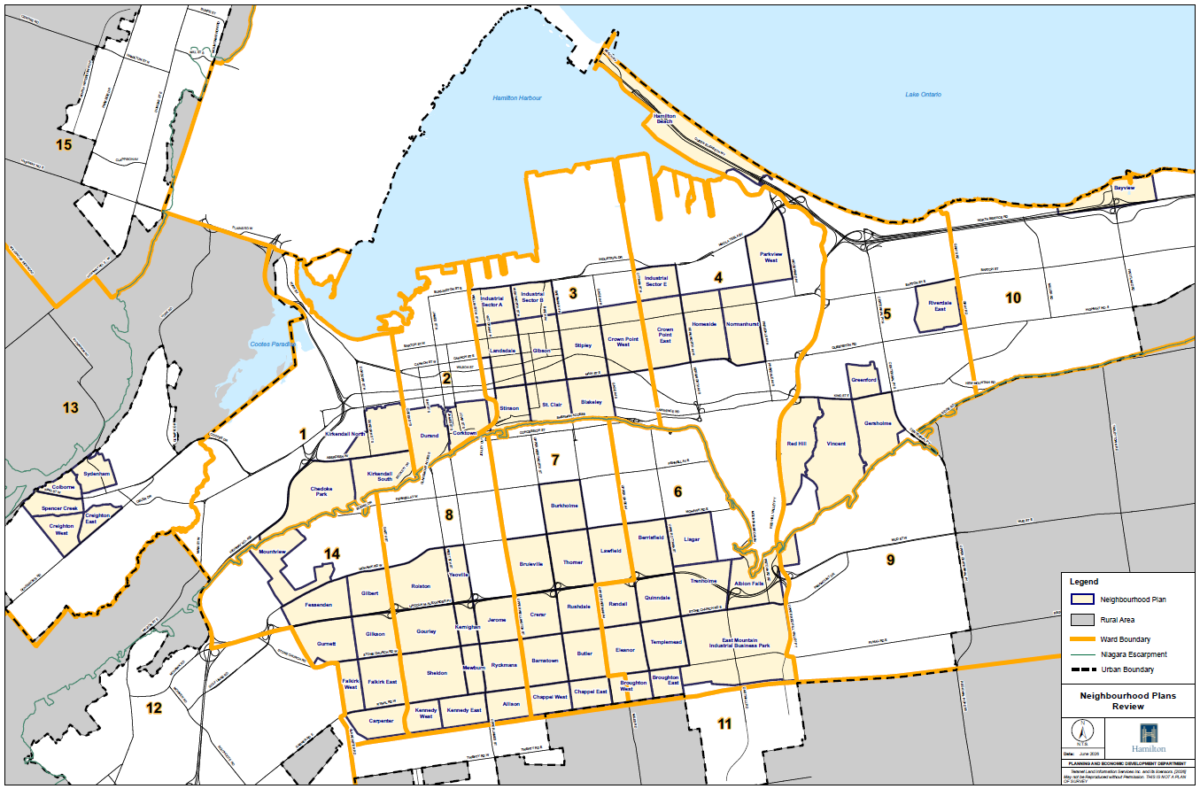
The City of Hamilton is reviewing decades-old Neighbourhood Plans that conflict with current provincial and municipal housing policies – particularly around intensification and development priorities – with some plans potentially being eliminated. As the first step, City planning staff are determining what criteria will be used to evaluate the plans, Acting Director of Planning and Chief Planner Anita Fabac stated in a June 15, 2026, memo.
Hamiltonians can have their say through an online survey at https://engage.hamilton.ca/neighbourhoodplansreview, or by attending one of three workshops:
- Monday, June 22, 2026, at the Westmount Recreation Centre, 6:00 p.m. to 8:00 p.m.
- Wednesday, June 24, 2026, at the Bernie Morelli Recreation Centre, 6:00 p.m. to 8:00 p.m.
- Wednesday, July 15, 2026, a virtual session, 6:00 p.m. to 7:00 p.m. Registration is required.
The City is asking for feedback on its proposed evaluation criteria – which fall into four categories – as well as suggestions for additional ones:
The proposed evaluation criteria fall into four categories:
- A plan’s age and how it functions today
- How much an individual plan conflicts with Hamilton’s Official Plans
- Whether a plan is needed to secure future rights-of-way for new roads
- Whether a neighbourhood has special planning characteristics, such as employment uses, higher-order transit, or parks deficits
There are 90 Neighbourhood Plans currently in effect that were created from the 1960s to the late 1990s. Sixty-nine are within the former City of Hamilton, 19 are within the former City of Stoney Creek and two are within the former Town of Dundas.
City Council directed planning staff to begin this review in November 2025, with the goal of modernizing the plans to support orderly development that’s mindful of neighbourhood needs while helping Hamilton meet its growth goals. On May 13, 2026, Council formally repealed Neighbourhood Plans situated within existing Secondary Plan areas.
Ontario’s municipal planning framework has evolved significantly since these documents were enacted decades ago. Most land use decisions are now governed by provincial policy, official plans, and secondary plans.
“Many of the existing Neighbourhood Plans are now outdated and may conflict with newer policies that support greater flexibility and a wider range of housing options,” the memo signed by Fabac states. “Outdated plans can create unnecessary barriers, additional review requirements and confusion regarding policy direction.”
Residents have until July 31 to weigh in online or at one of the three sessions above. The findings will go to next term’s City Council in early 2027.
Production Details
v. 1.0.0
Published: June 21, 2026
Last updated: June 21, 2026
Author: Joey Coleman
Update Record
v. 1.0.0 original version