The Court of Appeal for Ontario (ONCA) is set to hear oral arguments Tuesday in a case that could define the limits of free expression on government-provided advertising platforms across the province.
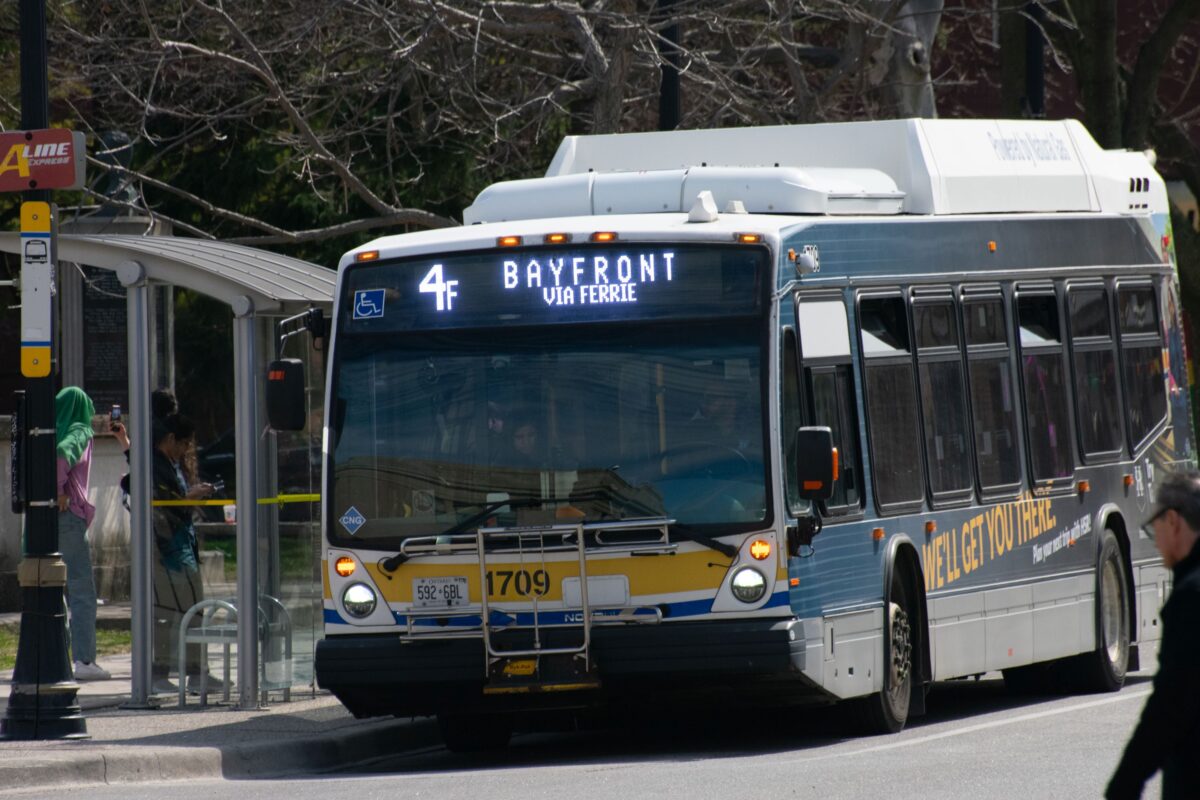
The Christian Heritage Party (CHP) is appealing a Divisional Court decision that upheld the City of Hamilton’s refusal to permit a bus shelter advertisement. The 2023 advertisement featured a photo of a young woman with the text “Woman: An Adult Female” and the tagline, “Bringing Respect for Life and Truth to Canadian Politics.”
The CHP argues the City of Hamilton violated its Charter right to free expression, and is asking the ONCA to overturn a lower court decision which found the City’s denial was a reasonable outcome within its authority.
In the November 2024 Division Court decision, Justices Paul B. Schabas, Richard A. Lococo, and Michael G. Emery unanimously ruled the City met the tests of law, had adequately considered the CHP’s free expression rights weighed against the City’s rights and interests, and those of the transgender and non-gender conforming persons.
“The City balanced its statutory interest (in providing a public transit system that was safe and welcoming for all people) against CHP’s Charter protected right to freedom of speech, especially political speech,” the Justices wrote. “The City made extensive submissions about the legal and social status of and challenges faced by transgender and non-gender conforming individuals.”
“The City’s decision is reasoned, fair and balanced with respect to the CHP’s rights and the City’s statutory obligations and policies. It falls within a range of reasonable, acceptable outcomes.”
CHP Appeals Arguing Charter Precedents Not Adequately Considered
In its appeal filing, the CHP argues the Divisional Court panel committed errors of law by failing to fully consider Charter precedents and giving undue weight to third-party opinions submitted by the City. The Court of Appeal for Ontario granted leave to appeal in May 2025.
Intervenor Status Granted to Two Groups with Diametrically Opposed Views On Gender Expression
In October 2025, the Court granted intervenor status to two groups with diametrically opposing views on gender expression: Egale, a 2SLGBTQI advocacy organisation, and the Association for Reformed Political Action (ARPA) Canada, a social-conservative Christian organization.
The presence of these intervenors sets the stage for a decisive precedent regarding content on public advertising spaces. Municipalities and transit agencies have faced these challenges for over 15 years, since the Supreme Court of Canada confirmed that Charter protections apply to government advertising spaces and that political ads must generally be permitted.
CHP’s 2023 Ad and Appeal Arguments
The dispute began in late January 2023 when Outfront Media, acting for the City of Hamilton, refused the CHP’s ad buy. The City Manager’s Office subsequently denied an appeal, leading the CHP to file for judicial review. The City maintained the ads would jeopardize its ability to provide a safe and welcoming transit environment.
The Divisional Court upheld the decision as reasonable following the Vavilov standard, named for the 2019 Supreme Court of Canada decision of the same name which states the court’s role in review is to determine if a decision-maker’s reasons are sound and if the decision was reasonably available to them.
The CHP is arguing the Divisional Court too narrowly constrained itself to the Vavilov framework for judicial review and failed to consider the broader Charter free expression issues involved, failed to conduct an extensive-enough review of the City’s decision-making process, failed to properly consider CHP’s arguments, and failed to engage binding precedents in cases such as Ward v. Quebec and Bracken v. Niagara Parks.
The case hinges on balancing the Section 2 right of free expression against Section 1, which allows for reasonable limits prescribed by law.
Opportunity for ONCA to Set Clear Precedent for Advertising on Government Property
Since the Supreme Court’s 2009 decision in Greater Vancouver Transportation Authority v. Canadian Federation of Students — British Columbia Component (Translink v. CFS), trial courts have repeatedly been called upon to referee disputes between social-conservative Christian organisations and municipalities, often regarding the issues of abortion and gender expression.
The City of Hamilton has been involved in many of these legal cases. Prior to the 2024 decision, none of the City’s advertising refusals were upheld by the Divisional Court.
The 2009 Translink v. CFS decision involved non-controversial expression by The Canadian Federation of Students encouraging students to vote in a provincial election. Although The Supreme Court upheld the applicability of The Charter to government advertising policies, the non-controversial nature of the advertisement limited The Court’s ability to provide guidance regarding the limits of free expression.
The Supreme Court wrote that limits on advertising are contextual and suggested that the Canadian Code of Advertising Standards could be used as a guide to establish reasonable limits, including limits on discriminatory content or on advertisements which incite or condone violence or other unlawful behaviour. However, the Code cannot solely be relied upon, because private bodies are not subject to Charter review.
During the past 15 years, only two cases have reached the provincial appellant level.
Generally speaking, until the Hamilton decision that is subject of this appeal, courts across Canada have generally upheld advertising denials on appeal, to paraphrase the Court of Appeal of Alberta, for ads that are of a ‘hateful nature,’ that have a ‘potential for harm’ to the ‘likely audience’ [of transit users in general], are of questionable accuracy, and have an ‘extreme tone.’
At the same time, as proven in the Hamilton cases, the courts have upheld broad protections for free expression, including permitting ads that the City of Hamilton labelled as harmful.
With diametrically opposed intervenors submitting arguments, Ontario’s Court of Appeal has an opportunity to bring clarity to these issues.
Note: Ontario Conservative Premier Doug Ford’s government stated that it is “considering measures to ban political advertising on government property, whether it be on buildings, billboards or transit stations.” It remains to be seen how the government proposes to do so in light of the 2009 Supreme Court decision.
Production Details
v. 1.0.0
Published: February 3, 2026
Last updated: February 3, 2026
Author: Joey Coleman

Update Record
v. 1.0.0 original version