
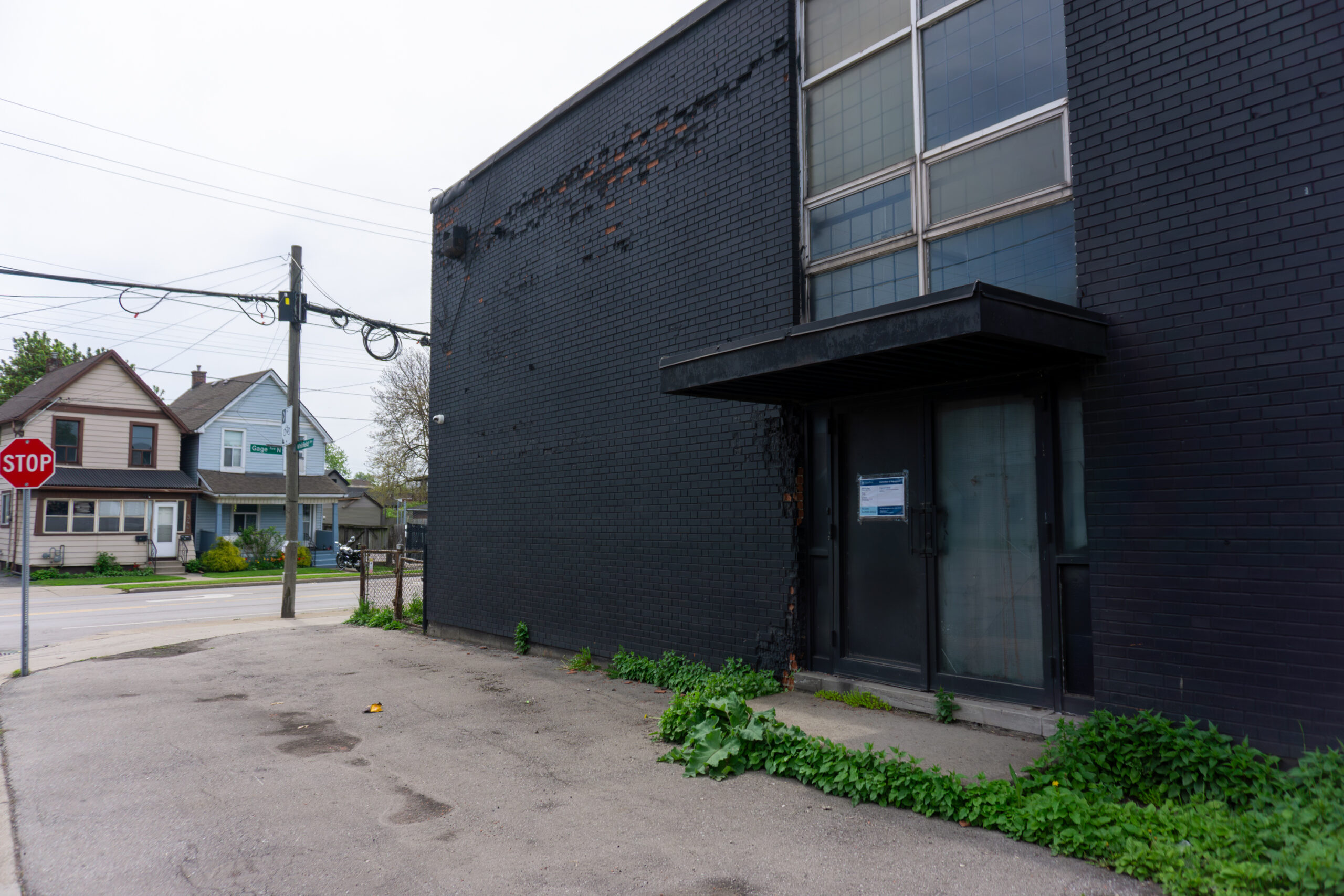
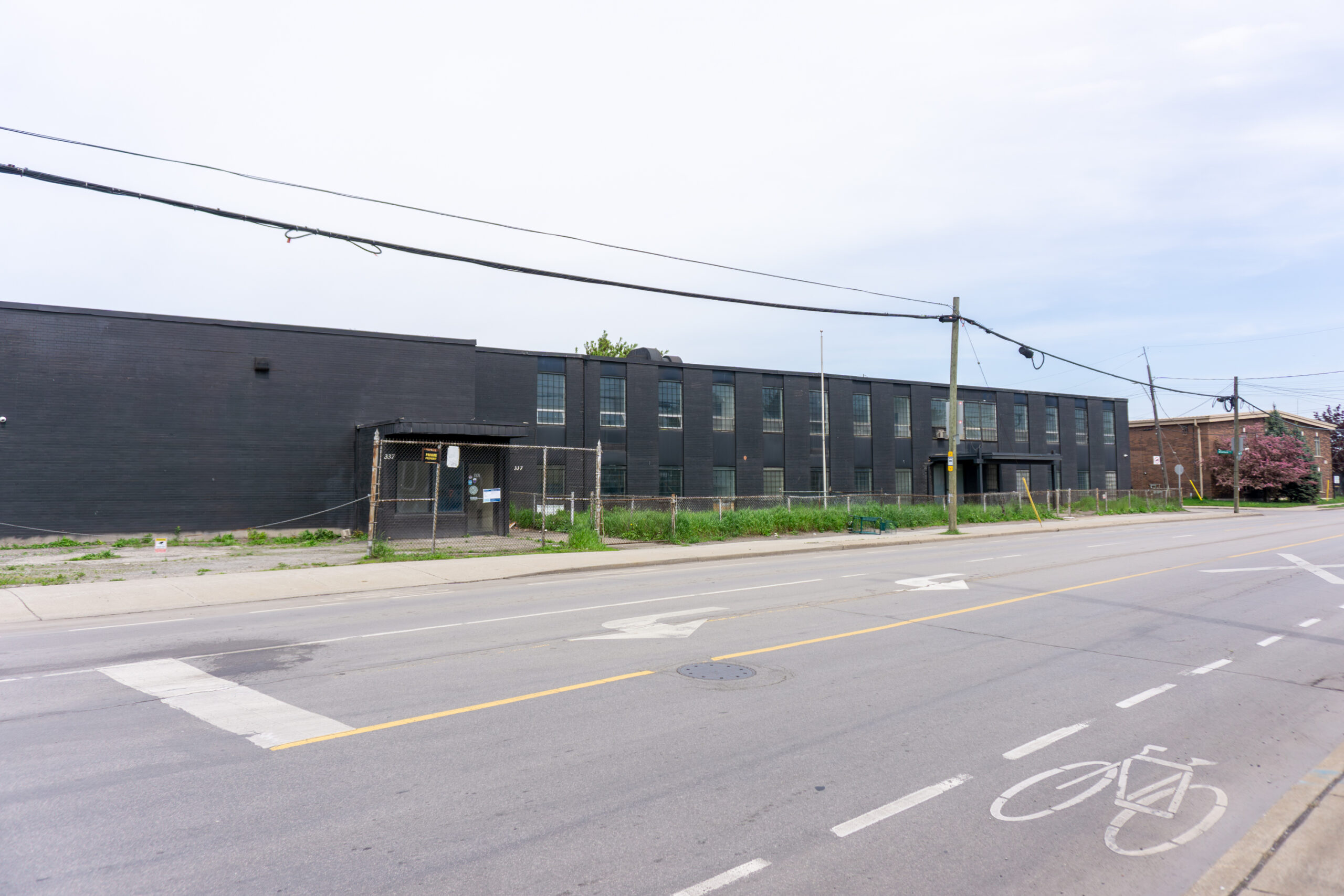
Hamilton’s Committee of Adjustment is being asked to decide if locating the Salvation Army’s emergency men’s overnight shelter in a building at 337 Gage Avenue North, which was once used as a day school, is a minor variance.
The Salvation Army, in partnership with the Hamilton Urban Precinct Entertainment Group, is seeking to relocate from Downtown Hamilton to the central north Ward 3 neighbourhood stating that this new use of the Gage Avenue North property should be approved under Section 45(2) of the Planning Act as a reasonable evolution of a legal non-conforming use.
The property, formerly an educational establishment, is currently zoned for general industrial uses.
The City’s professional planning staff firmly reject these arguments. According to the staff planning report, the City contends that an emergency shelter providing round-the-clock overnight accommodations is fundamentally not similar to a school. Staff note Hamilton’s zoning by-law explicitly excludes overnight accommodations from the definition of a social service establishment.
The zoning by-law distinguishes between a “Social Service Establishment” — defined as providing “non-profit services intended to promote and improve the independence, economic self-sufficiency, social and health development of citizens” but explicitly excluding “facilities in which overnight accommodation is provided” — and an “Emergency Shelter” — defined as providing “short term accommodation of a transient nature.”
Staff are of the opinion that the proposed overnight accommodation is less compatible with the uses permitted by the General Industrial zone and introduces a sensitive land use that may impact the future viability of the employment area. The 24/7 overnight accommodation may also result in nuisance impacts on the surrounding neighbourhood when compared to an educational establishment.
The staff report states that a Zoning By-law Amendment and Official Plan Amendment applications are the appropriate route to permit a Social Service Establishment with overnight accommodation.
Hundreds of people have submitted letters of opposition to the proposed shift, and dozens of downtown businesses, civil institutions, business leaders, and government bodies have submitted letters of support.
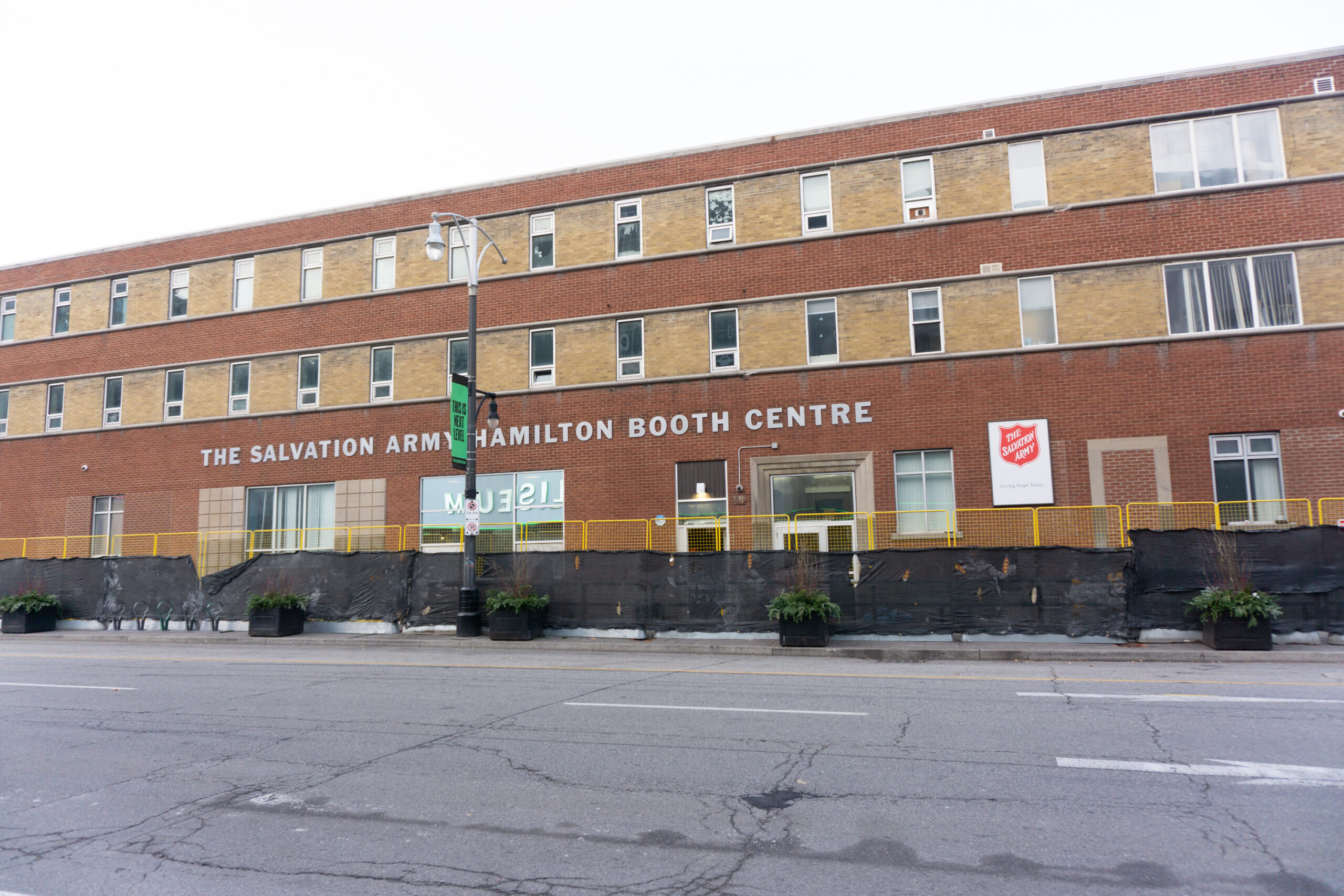
The Salvation Army proposes the adaptive reuse of a vacant building, including a one-storey addition of approximately 1,060 square metres, to house the Hamilton Booth Centre. The facility would provide short-term transitional housing for roughly 120 individuals currently located at the downtown 94 York Boulevard facility which is located across the street from TD Coliseum.
Residents near the Gage Avenue site are universally opposed to the facility transfer, citing concerns about the concentration of social services in Ward 3 and safety issues regarding the site’s proximity to residential family homes.
Resident Paul Wardlaw noted the property recently served as a commercial film production studio, suggesting the legal non-conforming educational use has already lapsed. Dan Willer submitted a formal objection arguing the applicant is circumventing the level of review and public accountability that would accompany a rezoning application.
Other opponents contend the relocation isolates vulnerable populations to benefit downtown real estate. Mohamad Bsat, who works in downtown social services as a lawyer at the Hamilton Community Legal Clinic, wrote (in a personal capacity) that the move is “deeply problematic”.
“To put folks in an isolated and industrial location further ostracizes them while also starving people from nearby social services,” Bsat wrote. “This is nothing more than thinly veiled classism.”
Resident Jonathan McKibbin argued that the facility transfer represents “a transparent attempt to push Hamilton’s most visible problems out of the downtown core now that the new TD Coliseum has drawn fresh attention to the city.”
“Families should not be asked to pay the price for failed government policies and they certainly should not be asked to do so simply because the optics have become inconvenient near a new arena,” McKibbin wrote.
Prominent downtown and community voices, including Hamilton Health Sciences, Mohawk College, the Labourers’ International Union of North America, and the Hamilton Chamber of Commerce, have submitted letters supporting the site transfer. These groups emphasize the inadequacy of the aging York Boulevard facility and argue that a purpose-built facility will provide better care while aiding downtown revitalization.
Hamilton Chamber of Commerce CEO Greg Dunnett stated that investing in modern infrastructure for the Salvation Army will improve community outcomes and neighbourhood stability.
“Ultimately, this is about ensuring Hamilton continues to evolve as a city where economic growth, community well-being, and social responsibility move forward together – not in competition with one another,” Dunnett wrote.
Joe Mancinelli, International Vice President for the Labourers’ International Union of North America, emphasized the balance between social welfare and city-building objectives.
“Investing in infrastructure that enables organizations to deliver services more effectively, safely, and compassionately is an important part of building stronger communities,” Mancinelli wrote.
Mohawk College President Paul Armstrong argued that the proposal aligns with the city’s economic development strategy.
“At a time when addiction, homelessness, and mental health challenges continue to rise, Hamilton requires facilities that are purpose-built, integrated, and capable of delivering meaningful outcomes,” Armstrong wrote.
Hamilton Health Sciences Vice-President Aaron Levo contended that aging spaces hinder the delivery of effective care.
“A safe, modern, and purpose-built facility will strengthen The Salvation Army’s ability to provide comprehensive support, including stabilization services, mentorship, housing pathways, and community programming that help individuals transition toward independence and renewed contribution to society,” Levo stated.
Darko Vranich, CEO of Vrancor, explicitly linked the proposed facility to the success of the nearby arena, arguing that the district around the TD Coliseum needs to be redeveloped to reinforce community benefits and a municipal tax base. Vranich added that the current shelter lacks modern standards and requires significant capital investment to remain viable.
Hamilton Farmers’ Market Stallholders Association President Jeffrey Pychel wrote that vendors unanimously support the facility relocation.
“We believe supporting this relocation demonstrates a balanced and forward-thinking approach one that acknowledges the need for strong social supports while also helping create the conditions for a vibrant, welcoming, and revitalized downtown,” Pychel stated.
CoMotion Co-Founder Ryan Patrick Moran also submitted a letter of support, characterizing the facility transfer as an opportunity to modernize services while strengthening the downtown core. Moran contended that the move allows a respected organization to operate from a more modern, appropriate, and effective facility.
“Hamilton needs strong social services,” Moran stated. “It also needs a downtown that residents, workers, businesses, students, visitors, institutions, and cultural organizations can confidently participate in. Those two goals should not be treated as being in conflict.”
The Committee of Adjustment will hear the application at 10:15 a.m. on May 19, 2026.
Production Details
v. 1.0.0
Published: May 19, 2026
Last updated: May 19, 2026
Author: Joey Coleman

Update Record
v. 1.0.0 original version
Discussion
0 commentsComments are closed on this story.