

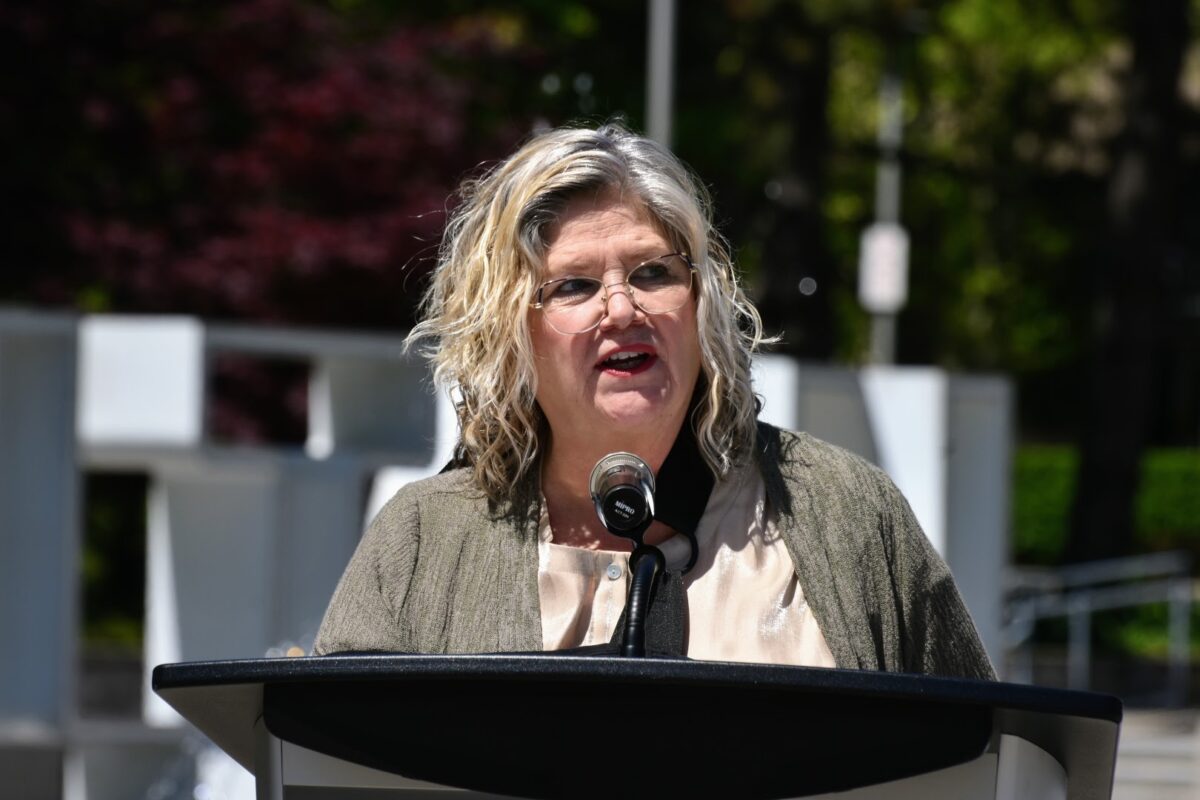
Hamilton Mayor Andrea Horwath is establishing stronger messaging against her potential conservative-leaning opponents in the October municipal election.
In a deleted tweet, Horwath directly countered messaging by recently elected Ward 8 Councillor Rob Cooper regarding recent Council votes on stormwater fees, and a vote on charging a cost-recovery user fee for developer-initiated secondary plan applications.
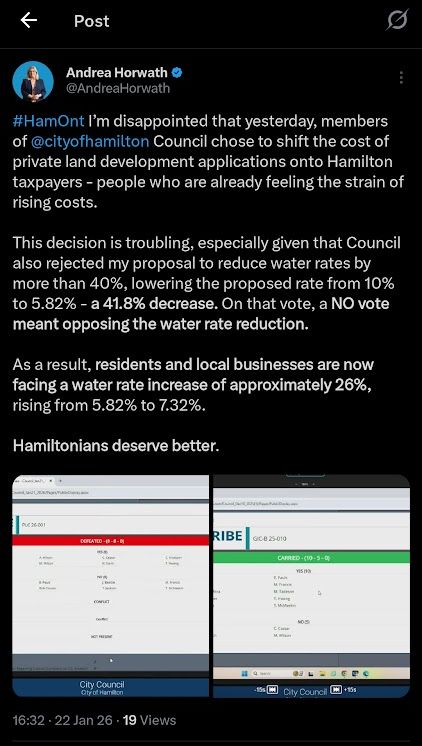
Text of post:
HamOnt I’m disappointed that yesterday, members of @cityofhamilton Council chose to shift the cost of private land development applications onto Hamilton taxpayers – people who are already feeling the strain of rising costs.
This decision is troubling, especially given that Council also rejected my proposal to reduce water rates by more than 40%, lowering the proposed rate from 10% to 5.82% – a 41.8% decrease. On that vote, a NO vote meant opposing the water rate reduction.
As a result, residents and local businesses are now facing a water rate increase of approximately 26%, rising from 5.82% to 7.32%.
Hamiltonians deserve better.
Stormwater Fee
Horwath was in favour of continuing with the stormwater fee for rural property owners who are not connected to the sanitary sewer system.
The rural fees would’ve be applied to City funding for conservation authorities, rural culverts, ditches, and other existing city expenses.
Council voted 10-5 against the implementation of fee. The result is that Hamilton’s 2026 water bills will increase by 7.3 per cent instead of 5.82 per cent. Mayor Horwath was not present for the vote.
Developer-Initiated Secondary Plans
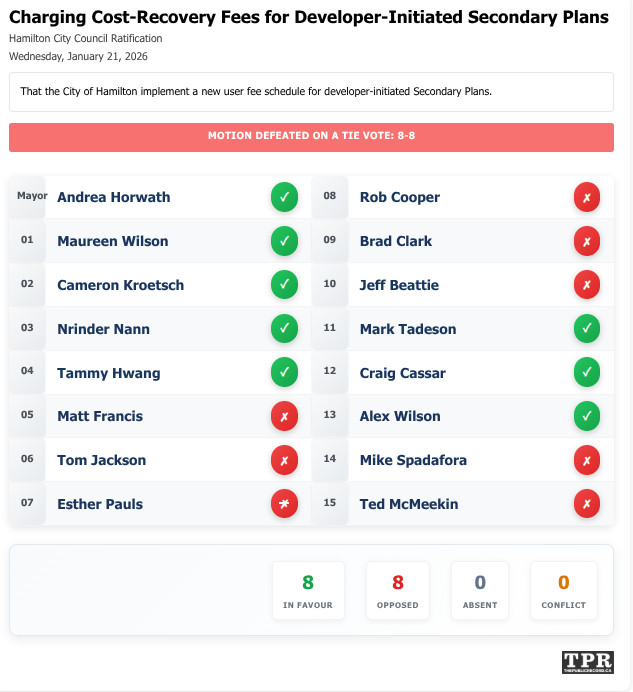
This week, a staff proposal to implement cost-recovery fees for developer-initiated secondary plans failed on a 8-8 tied vote.
The Planning Act now requires the City of Hamilton to make a decision on secondary plans within 120 days of receiving applications. Hamilton’s planning directors expect the City will receive developer-initiated secondary plans for the contested urban boundary expansion areas. Developers are challenging City Council’s urban boundary freeze at the Ontario Land Tribunal.
Secondary plans guide the development of neighbourhoods and subdivisions, ensuring that growth is managed in an orderly manner and the necessary infrastructure and services are planned for.
In the past, secondary plans were initiated by the City of Hamilton with all costs borne using municipal public funds.
Council members who voted in favour of the new user fee argued that developers should be paying cost-recovery fees for municipal staff review of their plans.
Councillors who opposed the fee argued the City is saving millions of dollars by not having to create the secondary plans, that the private-sector will move more quickly in completing plans, and that the user fee was a new type of tax on the development industry during a time of economic uncertainty.
Horwath’s Challenging Path to Re-Election
Mayor Horwath faces the incumbents challenge of defending a four-year record in a competitive that is expected to see close 2022 runner-up Keanin Loomis running again. Horwath won the race with 59,216 votes, with Loomis having 57,553 votes.
An October 2025 opinion poll showed that Loomis and Horwath enjoy similar levels of voter-intent support, with Loomis ahead of Horwath.
However, among Ontario ten large municipality mayors, Horwath was the only one with a negative overall approval rating.
Election day is October 26.
Production Details
v. 1.0.0
Published: January 23, 2026
Last updated: January 23, 2026
Author: Joey Coleman

Update Record
v. 1.0.0 original version