
Update: the HPL Board is now permitting delegations.
I cannot believe I have to write this column again: public delegations are foundational to local democracy and must be permitted except in the most exceptional of circumstances.
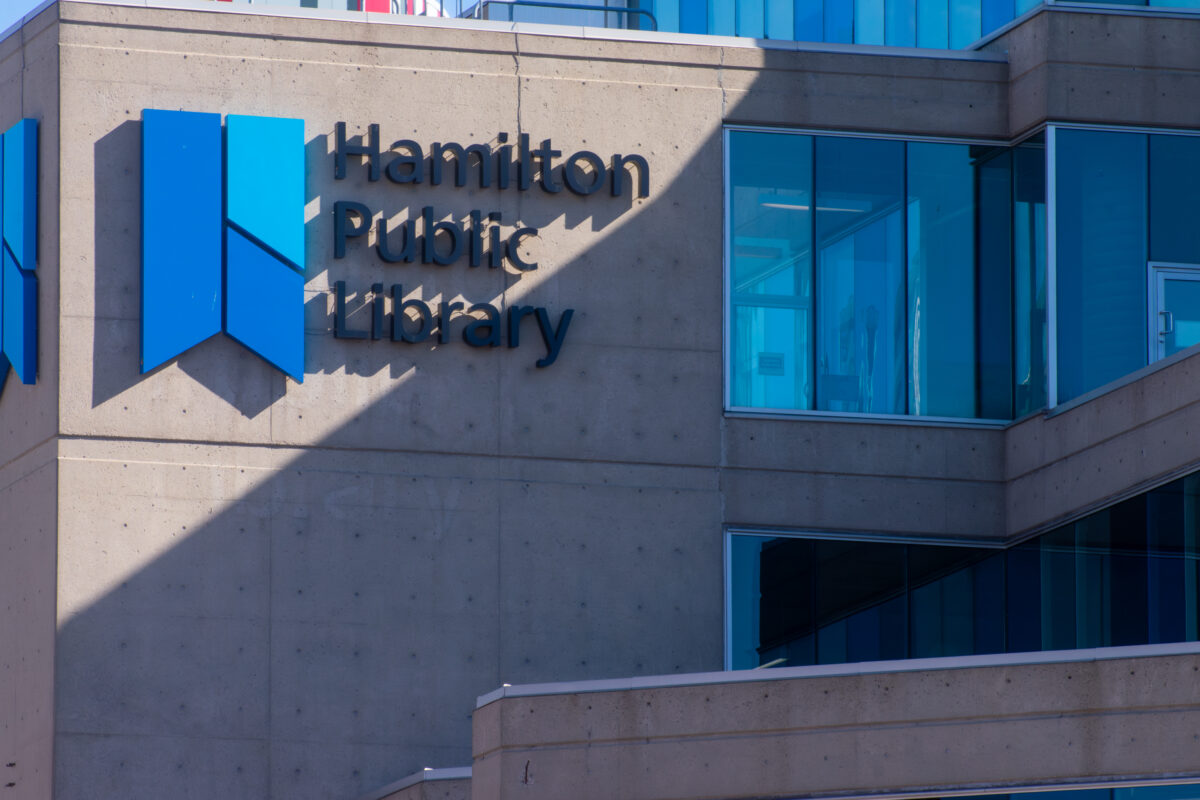
What makes this repeat of the same basic argument even more frustrating is that it is the Hamilton Public Library (HPL) Board of Directors which is refusing to hear public delegations.
The very purpose of a library is to equip the citizenry with the literacy skills and knowledge to become effective and meaningful participants in our democracy.
On Friday, March 6, the HPL announced it will be scanning library cards for admittance into the Downtown Central Library branch as a mitigation measure to address behaviour problems by a limited number of people, prevent drug transactions inside the branch, and hopefully decrease the number of resulting overdoses which are occurring.
Within hours, individuals and advocacy organizations sought delegate status for the upcoming March 11 Library Board meeting to speak to the new policy. The Board told them they were too late — anyone wishing to comment needed to have registered the previous Wednesday, two days before the policy was first announced.
This is absurd. How can people register to delegate about a policy they do not know exists?
Controversy is uncharted territory for the normally sleepy Library Board.
A typical Library Board meeting entails hearing good news updates about all the wonderful activities and community events which occur in library branches throughout Hamilton, approving the acceptance of donations to enable the library to do more, and the greatest criticism the Board ever endures is the odd delegation seeking quicker expansion of existing branches, or the opening of a new one.
Nobody on the Library Board, or on the staff of the library system, signed up to deal with the political debate regarding illicit drug laws, supervised consumption sites, encampments, or social disorder.
Yet, here we are.
Wednesday’s Library Board will be the first in decades to have an audience in the public gallery. (For years, I’ve been the only observer in the room.) It will be the first with protest signs that I can ever recall.
As with all controversial issues, it should include public delegations.
In a democracy, viewpoints get heard, viewpoints get expressed, they are not ignored outright.
The Library Board can reasonably limit those delegations to a representative sample of viewpoints, expertise, and lived experience. Delegations are not a filibuster, and Library Board members are citizen volunteers.
As proposed, the Library’s new access control policy is reasonable. Nobody will be turned away from the Library for lack of government identification. Nobody will be denied service because of their socio-economic status.
People who choose to deal or use illicit substances will be temporarily restricted until such time as they agree to respect the purpose of the library space. Those who would disrupt, threaten, or otherwise cause others to be unable to use the space will also be temporarily restricted.
The result will be a library better able to fulfil its purpose. A library that can better assist those facing socio-economic and health-related challenges. A library that, in the words of Hamilton’s Chief Librarian, needs to be a library.
But to truly be a library, the Library Board must permit viewpoints to be expressed at Wednesday’s meeting.
Let’s hope they reverse the illogical ban on delegations — if not for the sake of democracy, for the sake of their own credibility.
The decision to implement access control requires the public to trust it will be used for the purpose stated. The public cannot trust an institution which is unwilling to hear differing viewpoints.
Wednesday’s Library Board meeting is scheduled to begin at 6:00 p.m. and is being held in the fifth floor boardroom at the Central Library branch. It will also be livestreamed.
Production Details
v. 1.0.0
Published: March 10, 2026
Last updated: March 10, 2026
Author: Joey Coleman

Update Record
v. 1.0.0 original version
v. 1.1.0 added update note, the HPL Board is now permitting delegations.
Discussion
1 commentSo they can delegate in the next meeting, correct? They aren’t preventing people from delegating, they just timed the news release at an inopportune time vs the next meeting.
Let’s not act like the board is removing the rights of the people here in some egregious manner. They can’t always schedule emergency decisions, and the other items/rules such as timing for allowing delegates in board meetings still apply.
Go next month, speak your mind and then you will have a month of this policy in place to have a fully informed opinion.
If they close meetings to the public and don’t share the minutes? Sure. Then we protest our rights.
Comments are closed on this story.